
Hat Glossary

Collapsible content
A
- AGAL - (ah gaul) The thick cords of wool which hold the KAFFIYEH, the cloth headdress of desert-dwelling peoples, in place.
- ALPINE - Sport hat of soft felt or tweed. The crown slants upward to a lengthwise crease. The narrow brim is rolled up at the back and turned down in front. Brush or feather trim in the headband. Adapted from hats worn by people in the Swiss Alps. Also TYROLEAN or BAVARIAN HAT.
- ANNIE HALL - (Late 1970's) In the movie "Annie Hall," actress Diane Keaton popularized a fashion consisting of a drooping hat, long vest, wide tie, baggy pants, and a man's shirt.
- ARCTIC CAP - Fabric crown insulated with goose down. Mouton lamb storm flaps turn down to protect the neck, ears, and forehead.
- ATEF - See EGYPTIAN CROWN.
- ATTIFET - (Mid 16c.) French headdress consisting of hair rolled over pads. Worn with heart-shaped cap. See ARCELET, MARY STUART COIF, and CAP.
- AUTOMOBILE BONNET - (Early 20c.) Large brimmed hat worn with a long chiffon, net, or tulle scarf that enveloped the face and hat and tied under the chin. Worn to protect the wearer while riding in open automobiles over dusty roads.
B
- BABUSHKA - (bah boosh ka) Russian word for grandmother. A triangular shaped scarf worn over the head and tied under the chin.
- BABY STUART CAP - Close fitting, shirred lace infant's cap. From the 17c. portrait of the infant Prince James Stuart by Van Dyck.
- BALMORAL - (bal mor al) The Scotch BLUEBONNET of the highlanders. Blue woolen beret cap with top projecting over a tartan band of Stuart colors, i.e. checkered design. In 1850, Queen Victoria and her Prince Consort made the Aberdeenshire, Scotland castle of Balmoral their summer residence. The Queen dressed the prince in the Highland costume and created a fashion.
- BANDINO HAT - (1930's) Woman's large-brimmed hat. Named for Luca della Robbia's 15c. renditions of the Christ Child.
- BARBE - (14c. to 16c.) A long piece of vertically pleated linen, worn under the chin and covering the chest. With a black hood and long black veil. The headdress of widows and mourners.
- BARBETTE - (late 12c. - early 14c.) Linen chin band, pinned in position on top of the head. Illustration shows the FILLET, a stiffened band of linen, wound over the BARBETTE covered with a small veil.
- BARRET - Wide flat cap worn during the Middle Ages by priests. Barret of velvet with embroidery and feathers shown in 16c. paintings by Holbein.
- BASEBALL CAP - (20c. American origin) A rounded cap with a visor and button on top. Also BALLCAP.
- BASHLYK - (Russian, from Turkish başlık, hood) A round-topped bonnet with lappets to be used as a scarf. Usually made of leather, felt, or wool.
- BASQUE BERET - (bask ba ray) Flat, round, woolen fabric cap worn by Basque peasants. Usually woven in one piece.
- BAVOLET - (ba vo lay) A cap worn by French peasant women. A 19c. style called the CURTAIN BONNET, had a back ruffle, called a bavolet, that shaded the neck. In the 16c., the BAVOLETTE was a piece of fabric that was folded and attached to the cap, with the folds projecting over the forehead and hanging down in the back.
- BEANIE - (20c., American) Small, round skull-cap, cut in gores to make it fit the head. Also BEANY, DINK, DINKY, WATCH CAP. See CALOT.
- BEAVER - A hat of various crown and brim shapes. Originally, in 14c., made of beaver skin. In 16c., made from felted beaver fur. In 17c., the tall top hat, made of silk in imitation of beaver.
- BEEFEATER - The narrow-brimmed hat worn by the British Yeomen of the Guards and Warders of the Tower of London since the 16c. Hat consists of a flat-topped, medium-high crown gathered into a headband.
- BEEHIVE - High, tapered crown, shaped like a beehive. Hat usually has a narrow brim.
- BELLBOY or BELLHOP - A small, stiff cap in pillbox shape, usually trimmed with braid or buttons, sometimes with a chin strap. Copy of a cap worn by hotel bellboys.
- BERET - (ba ray) A cap with a round flat crown of varying widths. Made of felt, wool or other fabric. Forms of the beret have been found since Ancient Times. In 15c., HALO BERET. Also BASQUE BERET, PLUMED BERET, TAM O' SHANTER, PANCAKE BERET, MONTGOMERY BERET.
- BERRETINO - (ber ret tee no) Square, scarlet skullcap with corners pinched in. As worn by Cardinals of the Catholic Church. See BIRETTA.
- BETHLEHEM HEADDRESS - Truncated, cone-shaped cap, decorated with gold and silver coins and jewels. Worn with a veil. Ancient Muslim headdress. Copied in the 1930's. See TARBOOSH.
- BIBI BONNET - (bee bee bunneh) Appeared around 1830's as a smaller version of the POKE BONNET. At first it was fitted close to the sides of the head, later the brim flared upward and forward in front. In the late 19c., any small fanciful and elegant hat was called BIBI. In 1956, Sally Victor came out with a BIBI style.
- BICORN or BICORNE - (by corn) A variation of the cocked hat, appearing around 1790, and supplanting the TRICORNE. The brim of the BICORNE is folded up in front and back. The BICORNE became the military dress hat of the British, Americans, and French. The WELLINGTON was a version that had tassels. The NAPOLEON hat was a BICORNE with a tricolor cockade.
- BIGGIN - (big in) From French BEGUINE, a cap worn by nuns. A coif-like cap, with ties under the chin, 16c. and 17c.
- BIRDCAGE - Hat of stiffened veiling, shaped like a birdcage.
- BIRETTA - (bi ret ah) Since 17c., a square cap with three or four upright projections, radiating from the center crown. Worn by Roman Catholic clergy. Developed, since 13c., out of a cap formed like the modern beret. Also BERRETTA, BIRRETTA, BIRETUM, BARRET-CAP, BARETTE, BERET.
- BLUEBONNET - Broad, slat cap of dark blue wool, woven in one piece. Narrow tartan headband. Colored tuft on top. Also BALMORAL.
- BOATER - (British) A stiff, straight-brimmed, straw hat with a flat crown and a ribbon band. Also known as a SKIMMER or a SAILOR STRAW. Introduced around 1864 for children, then worn by women. Worn by men from 1880 to 1930.
- BONGRACE - (16c. and 17c.) Oblong shaped, stiff material which dips over the forehead and drapes in back, worn over a coif.
- BONNET - Until 16c., any masculine head covering other than a hood was a bonnet (French), cap (English). Scotchmen still call their caps BONNET. Since 19c., the term refers to a soft head covering for women that ties under the chin.
- BOUDOIR CAP - (boo dwar) Softly shirred cap with a lace ruffle. In 19c. and 20c. - a cap worn to cover undressed women's hair.
- BOURRELET - Originally a twisted scarf or turban worn on the helmet. A 15c. term for the padded roll worn by both men and women as a base for a headdress.
- BOWLER - (bole er) In 1850, William Bowler made a hard felt hat, designed by the London hatter, Lock, for Sir William Coke. It was created to protect the head while riding horseback. The hat has a low melon-shaped crown and a rounded brim that turns up at the sides. The hat shape was adapted for women and children, accepted for town wear by men until WW II. Also BILLYCOCK, DERBY.
- BRETON SAILOR - (bret in) Woman's hat with a brim that turns up evenly all around.
- BROADBRIM - A nickname term for Quaker or Friend. See QUAKE HAT.
- BUBBLE - Melon shaped, pillbox cap.
- BULBOUS - (16c., German) A large, dome shaped cap. This hat completely covered the hair. (16c. Italian - BALZO, REBALZO)
- BUMPER BRIM - Hat with a tubular shaped brim. Size of brim and crown varies. See KRIZIA CAP for 1970's version.
- BUSBY - (buz bi) A tall, cylindrical fur cap with a regimental colored, bag-like ornament hanging from the top, over the right side. Brush on top of center front. Originally 15c. cavalry uniform of Hungarian Hussars.
- BUSH HAT - Wide-brimmed man's felt hat with upturned brim at one side. Also SOUTH AFRICAN SAFARI HAT, CADDIE, CADDY, SLOUCH HAT.
- BUTTERFLY HEADDRESS - (15c.) Variation of the HENNIN. Box-like cap, wired and draped with sheer veiling so that it stands out like butterfly wings.
- BYCOCKET or BYCOKET - (by cock et) High crowned hat with wide brim that is peaked in front and turned up in the back . Middle Ages, 16c., Italian students in 20c.
C
- CABAS - (kah bas) Version of PHRYGIAN BONNET brought out by Sally Victor in 1956.
- CABRIOLET BONNET - (kab ree o leh, kab ree ah leh) Large 19c. bonnet with brim, suggesting shape of two wheeled carriage top.
- CALASH or CALECHE - (ka lash) Large folding hood supported by hoops, designed to be raised or lowered over the exaggerated 18c. hair styles and MOBS. Named after folding top of calash or light carriage. Also THERESE, GAUZIER, BASHFUL BONNET.
- CALOT or CALOTTE - (ka lot) Small, round skullcap. Ancient Greek origin. In medieval times, worn under hood or crown. In 17c., worn under wig or as night cap over shaved head. Also ZUCHETTO, YARMULKA, SCHOOLBOY'S BEANIE or DINK.
- CALPAC - (kal pac) Large, black cap of felt or sheepskin worn by men in Bulgaria. Also SHAPKA, COSSACK CAP.
- CAMPAIGN HAT - Broad brimmed felt army hat with four dents in top of crown, 19c. origin. Popularized as "Smokey the Bear hat" from the U.S. Forest Service's Wildfire Prevention Campaign.
- CAMURO - (cah mow ro) Ermine trimmed, red velvet cap, larger than a skullcap, formerly worn by the Pope (Roman Catholic Church).
- CANOTIER - (kan o tyay) French version of the straw sailor hat, with straight brim, flat crown. Also BOATER.
- CAP - Of ancient origin. Snug fitting head covering, usually with partial brim or visor. Many variations during Middle Ages for men, women and children. Modern versions include BASEBALL, HUNTING, JOCKEY, SPORTS, BOY'S ENGINEER, ARMY FORAGE, etc.
- CAPE HAT - Half hat made by attaching fabric or felt to a bicycle clip.
- CAPELINE - (cap e lin) Hat with small round crown and a wide, floppy brim.
- CAPOTE - (ka pote) Close fitting bonnet with rigid brim, either of straw or boned into shape. Soft, shirred crown , ribbon bows tied under the chin, Victorian 19c. with deep ruffle in back. Also POKE BONNET, FANCHON, SCUTTLE BONNET, SUN BONNET.
- CAPUCHE - (ka poosh) Long, pointed hood worn by the Capuchin monks.
- CAPUCHON - (kap yoo chin) Medieval pointed hooded cape, the top stiffened down the center. Developed into the CHAPERON.
- CAPULET - (Eng. kap yoo let, Fr. ca poo lay) Adaptation of the JULIET CAP, worn on back of head. Refers to Juliet Capulet, heroine of Shakespeare's play, Romeo and Juliet.
- CARDINAL'S HAT - (13c.) Red hat with short, rounded crown and broad flat brim. Rank was designated by the number of tassels which terminated the cords.
- CARTWHEEL - Woman's hat with very wide, stiff brim and low crown. Usually of straw.
- CASQUE - (kask) From French for "helmet". A helmet-shaped hat.
- CASTOR HAT - (kas ter) From French for "beaver." A hat made of beaver or rabbit fur felt.
- CATER CAP - (kay ter) (19c., 17c.) Term for square, university cap. Also MORTARBOARD.
- CAUBEEN - (caw been) Irish slang term for an old and shabby hat.
- CAUL - (kol) (14c.-16c.) Headdress of hair arranged at each side of the head in silken cases. Arrangement covered with net of silver or gold cord, inter spaced with jewels and beads. Held in place by a golden headband or crown fitted over the upper edge of the caul. Also GOLDEN NET CAUL, RETICULATED HEADDRESS, CREPINE, CRESTINE, CRESPINETTE.
- CAVALIER HAT or CHEVALIERS - (17c.) Wide brimmed hat, velvet or beaver, trimmed with ostrich plumes on the left side or back. Usually one side of the brim is cocked or rolled. Seen in portraits of aristocrats of the period. The gentleman's hat as portrayed by the Flemish painter, Sir Anthony Van Dyck, and the Dutch painter, Frans Hals. The Cavalier hat had the crown circled with jeweled necklace or a gem encrusted silk band. Although some Puritans are pictured wearing the Cavalier hat, the usual Puritan and Quaker hat was of the same high quality but without the plumes or ornate band and the brim worn straight.
- CHADOR - The traditional concealing garment worn by Muslim women in public was semicircular, and wrapped around the head.
- CHAPEAU - (sha po) French word for outdoor head covering. A chapeau has a crown and a brim.
- CHAPEAU CLAQUE - See GIBUS HAT.
- CHAPEL CAP - Circle or triangle of lace, formerly placed on the head when entering a Catholic Church for services. It was carried in purse.
- CHAPERON - (shap ah ron) (Middle Ages into the Renaissance) Pointed hood (long point known as liripipe) with short cape. The hood face opening was placed over the forehead as a headband and the cape gathered up and pleated in the form of a fan. The liripipe was twisted around the pleated cape to hold it in place. (14c.) The petal scalloping or dagged or castellated edge was a variation. (15c.) This was gradually sewn into place as a hat. The chaperon was made up over a stuffed roll or ROUNDLET. The liripipe eventually reached great lengths.
- CHAPLET - (chap lit) Circle of fresh flowers, later fashioned in gold and enamels in the Age of Antiquity.
- CHARACTER HAT - Late 1970's rumpled tweed hat worn by New York Senator Pat Moynihan.
- CHARLOTTE CORDAY - (shar lot cor day) Version of MOB worn by Charlotte Corday during the French reign of terror, 1793. Tricolor band and rosette was the distinguishing feature.
- CHECHIA - (she shee a) Berber skullcap or TASHASHIT. Deep cylindrical, flat-topped cap of felt with a tuft or tassel. French regiment of Zouaves, organized in 1831, adopted the red felt chechia. Also FEZ. TARBOOSH.
- CHIGNON CAP - (shen yon) A little cap worn over the bun or coil of hair at the back of the head. Various styles and fabrics.
- CHILD'S PUDDING - Hat with a strong brim (bumper) that acts as a shock absorber when the child is learning to walk and tumbles.
- CHOU - (shoo) French for "cabbage." Rosette of tulle, lace, velvet, or ribbon used as ornament on hats in the late 19c. In 1938, term used for a soft hat with crushed crown.
- CITY FLAT CAP - Beret, with small brim, made of wool, felt, or knitted of black woolen yarn. (16c.) See STATUTE CAP.
- CLAFT HAT - Coptic for "hood." Ancient Egyptian striped linen headdress. After Napoleon's Egyptian campaign in 1798, the French Foreign Legion adopted the curtain like headdress for desert warfare. Also KLAFT, KHAT.
- CLOCHE - (klosh) French for "bell." Soft style of the 1920's, fashioned from a hood of chiffon or handkerchief felt. Hat that covered the head to the neck in back; it came to the eyebrows in front. A flapper age, boyish style.
- COAL SCUTTLE BONNET - (Late 18c., early 19c.) Bonnet with flat back and a scoop brim that resembles a coal scuttle. Also POKE BONNET, CAPOTE.
- COCKED HAT - Hat with large brim that turned up in various ways. Also BICORNE, TRICORNE, CAVALIER, CONTINENTAL, ANDROSMAN KEVENHULLER.
- COIF - (koif) Men's and women's close fitting cap of uncertain origin. Varying in style usually of soft cloth (Medieval). Worn by the clergy, under crowns of the nobles, under the metal helmet. In the 16c., worn under caps or the elaborate wigs. Through 19c., under wigs.
- COKE - (cook) See BOWLER.
- COOLIE HAT - Hats worn by Chinese laborers, previously referred to as "coolies" (now considered derogatory). Straw hat, usually woven in one piece, with a downward slant from a peaked crown. A straw hat fashion in 1980. Sometimes styled in fabric.
- COONSKIN CAP - Daniel Boone hat, worn by American frontiersmen. Made from raccoon skins, with the tail hanging down in back.
- CORNO - (12c.) The doges of the Republic of Venice wore the tall, conical ducal bonnet. From 13c. onward, the shaped cap had the point rising from the upper back. Worn over the white linen coif. Last Doge of Venice (1797) was conquered by Napoleon.
- COSSACK - Adaptation of cap worn by Russian Cossacks. Usually of fur or felt. Hat wider at the top than at the head size. A style in the 1980's made up in Persian lamb and fur fabric for women. A winter hat for men worn at an angle with a center indentation. See USHANKA.
- COUVRE-CHEF or CHEF - (Norman) Medieval head covering for women. A piece of fabric draped over the head and to the shoulders. Also COVERCHIEF, HEADRALL (Anglo-Saxon).
- COWBOY HAT - Originally a felt hat worn by cattle herders. The 1980's "urban cowboys and cowgirls" were wearing straw and felt versions of this wide, rolled brim hat with high creased crown. Also WESTERN, RANCHER, STETSON.
- COWL or CAPUCHON - (Medieval) Monk's hood attached to a cloak.
- CRESPINE or CRISPINE - (Gothic) A development in the RETICULATED HEADDRESS, consisting of the tight golden headband to which the CAULS were attached on the sides.
D
- DEERSTALKER - Sportsman's tweed or cloth cap with visors in front and back and earflaps outside and tied on top. Crown lined with scarlet poplin and reversible. As worn by deer hunters. Also SHERLOCK HOLMES CAP, FORE AND AFT, DUCKHUNTERS.
- DERBY - (USA der bi, UK dar bi) In 1888, the 12th Earl of Derby visited the United States wearing a stiff, hard, brown felt hat that had dome-shaped crown and a narrow, a slightly curled brim. This set a fashion named after him. Also BILLYCOCK, BOWLER, CLOCKER, COKES.
- DISCO HAT - (Late 1970's) A small hat worn above the forehead and tilted to one side, held on by an elastic or ribbon band in back. The discotheque was a popular place to observe fashion trends.
- DOLL HAT - Name given to small hats in various styles and materials. Usually worn forward and tilted above the right eye. In 18c. England, a feminine version of the MACARONI. In 1930, a hat designed by Schiaparelli. Frank Olive brought out a version in 1979.
- DORMEUSE - French for "sleeper." In 1770's, a cap of shirred lawn worn at night, with plaited ribbon, held on by a ribbon tied on top of the head. For daytime wear, the DORMEUSE BONNET came in many designs.
- DOULI - A traditional East Asian hat with a triangular shape.
- DUCKBILL - Bonnet having a long, high, curving visor. Usually tied on with ribbon under the chin. Worn by Marveluese of French Directoire Period (1795, dee rek twar). Also JOCKEY CAP, DIRECTOIRE BONNET.
- DUTCH CAP - Close fitting, pointed crown, cap with brim rolling up and flaring out at the sides. Dutch woman's cap of lace or muslin. Also VOLENDAM CAP.
E
- EGYPTIAN CROWN - About 3000 B.C.E., King Narmer united Upper and Lower Egypt. He combined the tall, pointed ATEF crown of white felt or wool with the RED WICKER CROWN, when he united the two kingdoms. Crowns were often decorated with the URAEUS (a rearing viper) and with the ANKH crown (a sign of life).
- ESCOFFIN - (14c., 15c.) Stuffed roll of various shapes. Originally a turban or heart shaped form, finally the two-horned shape worn over a caul and with wimple, or both. Began as GOLDEN NET CAUL, over a caul, finally the ESCOFFION was supplanted by the (15c.) HENNIN with veil.
- ETON - (ee ton) Cap worn by boys at Eton College, England.
- EUGENIE HAT - (u shay nee) The EMPRESS HAT of 1859. Style of Empress Eugenie, wife of Napoleon III. A revival of this shape in 1931 was worn tilted over the right eye, and trimmed with ostrich feather. Style worn by Princess Diana in 1980.
Featured Terms A-E
-
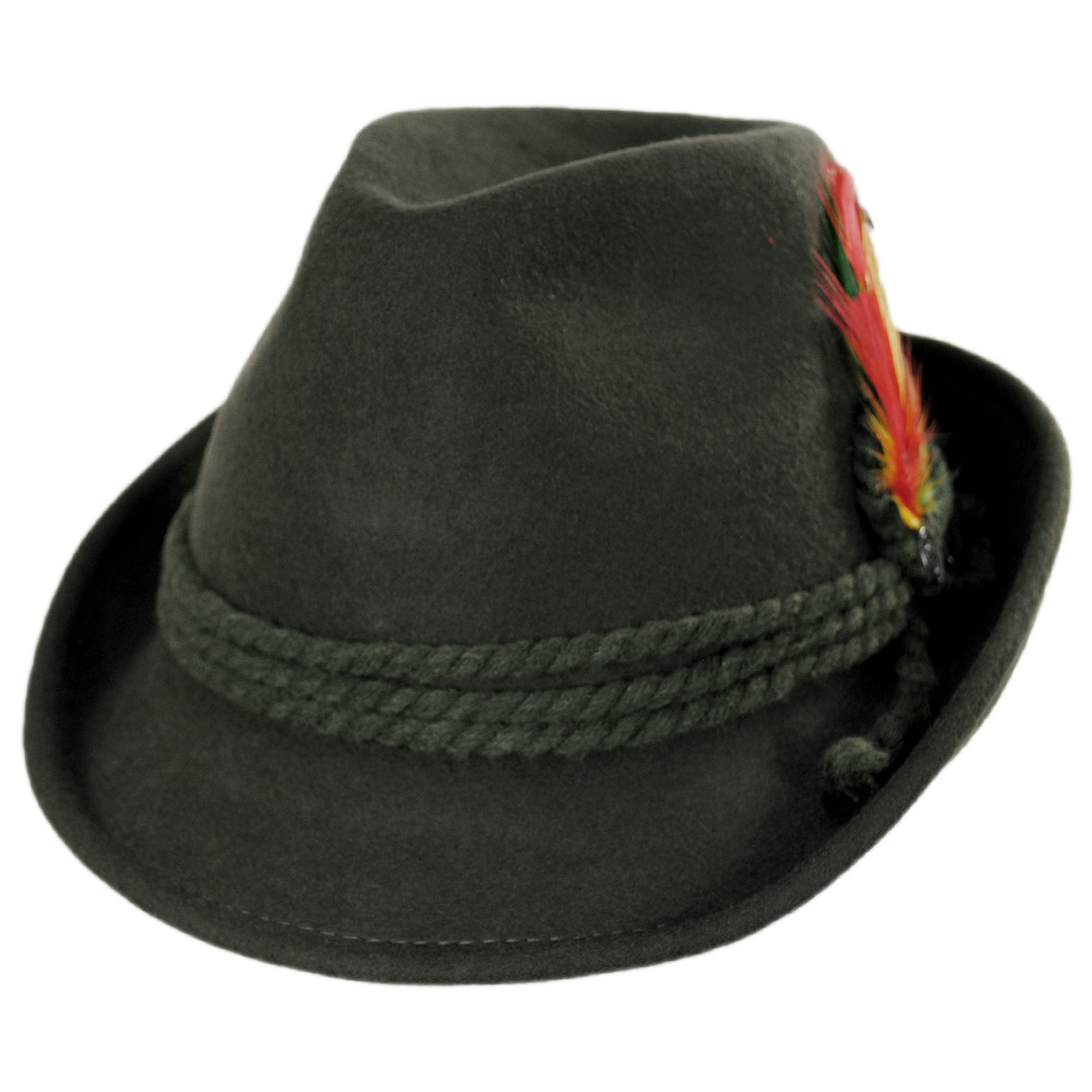
Alpine
Jaxon Alpine Fedora HatSport hat of soft felt or tweed with tapered crown, brim down in front and upturned at back. Trimmed with feather. Adapted from hats worn by people in the Swiss Alps. Also TYROLEAN or BAVARIAN HAT.
-
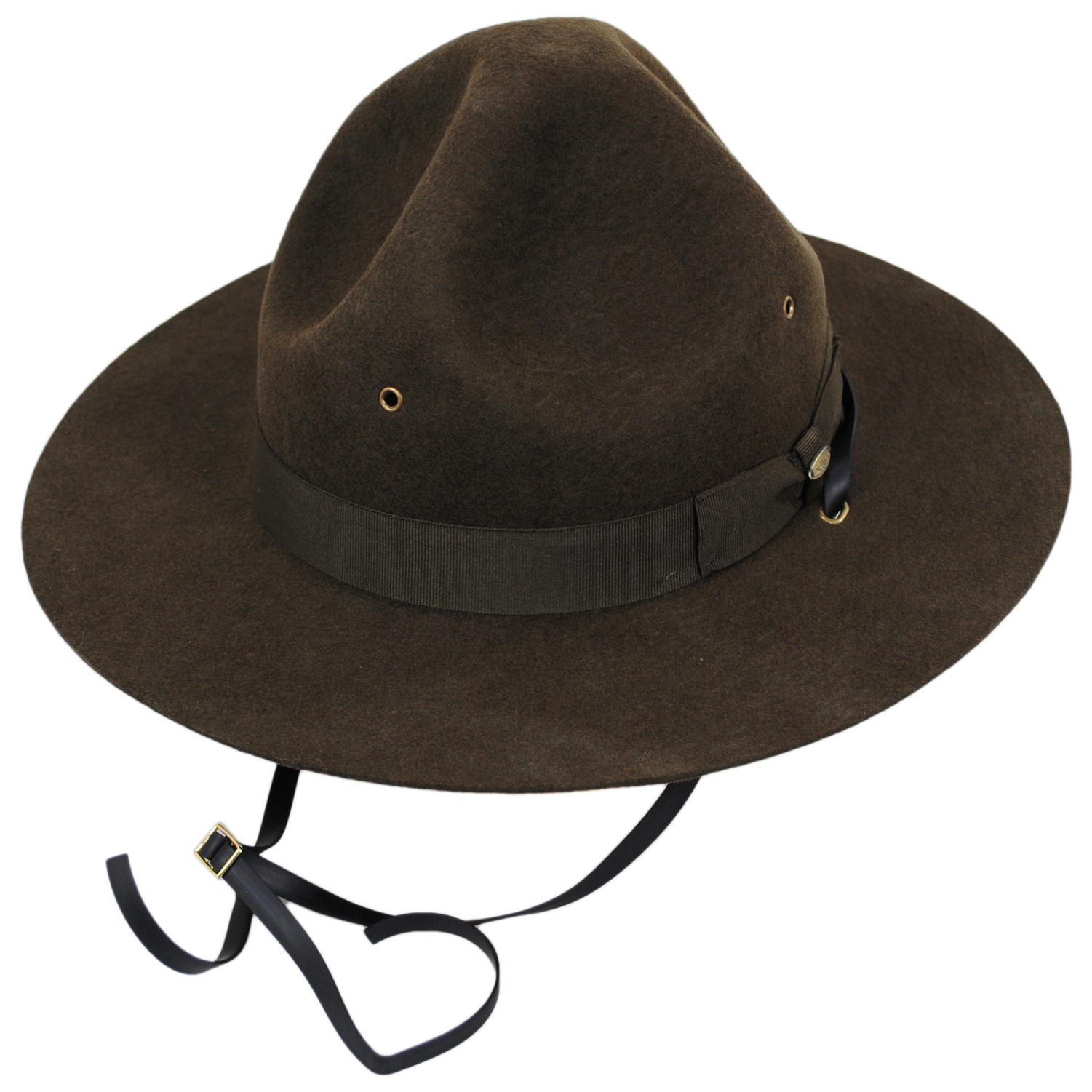
Campaign Hat
Scala Wool Campaign HatBroad brimmed felt army hat with four dents in top of crown, 19c. origin. Popularized as "Smokey the Bear hat" from the U.S. Forest Service's Wildfire Prevention Campaign.
-
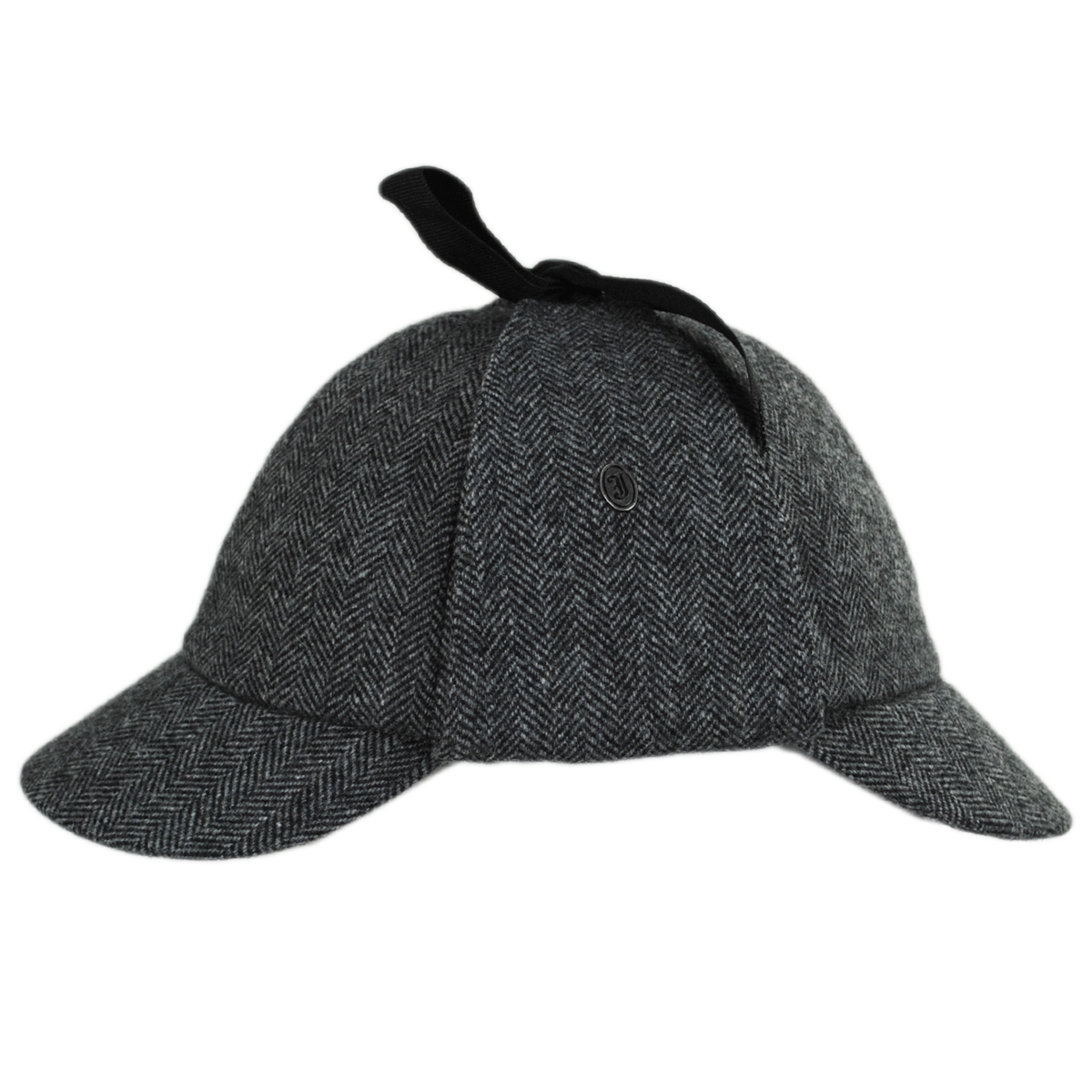
Deerstalker
Jaxon Sherlock Holmes HatSportsman's tweed or cloth cap with visors in front and back and earflaps outside and tied on top. As worn by deer hunters. Also SHERLOCK HOLMES CAP, FORE AND AFT, DUCKHUNTERS.



Collapsible content
F
- FEDORA - (fe doh rah) Men's soft felt hat with brim and lengthwise crease in crown, adopted by women. The name Fedora was after the heroine of Victorian Sardou's drama presented in Paris in 1882. Also TYROLEAN HAT, ALPINE HAT, HOMBURG.
- FERRONIERE - Renaissance headdress of Far Eastern design that had a jewel in middle of forehead, suspended from a fine chain or ribbon that was tied around the head. Fashion revived at various times.
- FEZ - A traditionally red or black felt cap that is shaped like a truncated cone and trimmed with a tassel. Turkish official dress from early 19c. until outlawed in 1923. Still worn in other parts of the near East. Got its name from Fez, Morocco, where the juice of a red berry, used as a dye, grew locally. Also CHECHIA, TARBOOSH.
- FILLET - A band worn around the head that holds the hair in place. In the early 13c., the fillet widens into a pillbox.
- FLAT CAP - A cut-and-sewn fabric or wool cap including the IVY, NEWSBOY, EIGHT-QUARTER, DUCKBILL, PUB, etc., cap styles. See CITY FLAT CAP, IVY CAP, NEWSBOY, STATUE CAP.
- FONTANGE - (fon tahnzh) Style originated in 1678, when the elaborate headdress of Duchess de Fontange was disarranged during a royal hunt. She tied her curls up with a garter of ribbon and lace and created a fashion. She became mistress of Louis XIV. This high curled coiffure with ribbon loops later became the BONNET FONTAGE, with a lace peak in front and a small cap. Fashionable until 1714, when Lady Sandwich, while presented at the French Court, appeared in a simple low hair-do and started a new fashion. In England called the TOWER CAP, COMMADE.
- FORAGE CAP - Late 19c. American Army cap. See KEPI, Copy of German cap.
- FRENCH HOOD - (16c.) Worn in various forms. The French Hood gradually replaced the Gable Hood. Smaller versions of the French Hood appeared in Holbein portraits (Lady Lee).
- FRONTLET - (15c.) The CALOTTE had a black velvet or gold, rounded or V-shaped loop showing on the forehead to which the HENNIN was attached. The FRONTLET enabled the wearer to adjust the weight of the HENNIN which was worn at 40 degree angle.
G
- GABLE or DIAMOND SHAPED HOOD - (16c.) Hood with back curtain long. Front lappets down on either side or pinned up. Later versions showed back curtain divided and pinned up. Style associated with the reign of Henry VIII, as portrayed by court paint, Holbein. Also PEDIMENTAL HOOD.
- GAINSBOROUGH or MARLBOROUGH - (18c.) These two English portrait painters influenced feminine fashion. Hat had a low crown and wide brim that turned up at one side, trimmed with plumes and taffeta or velvet ribbon. Designed to cover elaborate headdress.
- GARIBALDI PILLBOX - (1860's) The braid scrolled pillbox, inspired by the triumphs of the Italian liberator, Garibaldi, was adopted by fashionable women in London.
- GAUCHO - (gow cho) Hat with wide tilted brim anchored with cord that tied under the chin. Worn by South American gauchos.
- GIBSON GIRL - (1890's) Sailor hat style shown in illustrations by American artist, Charles Dana Gibson.
- GIBUS - (jy bus) Man's collapsible silk opera hat. Patented in 1837 by French inventor, Gibus.
- GLENGARRY BONNET - Blue woolen cap creased through the crown, like today's overseas cap. Appeared in 1805 in Glengarry, Invernesshire, Scotland. Cap has stiff sides and bound edges, finished with short ribbons hanging in back.
- GOB CAP - White cotton twill hat, four piece crown, and multi-stitched, turned-up brim. Formerly worn by sailors or gobs of the US Navy.
- GORGET - (gor jit) (14c., 15c.) Draped linen or silk cloth, covering neck and pinned to the hair plaits or chin strap. Also tucked into neckline of grown. Also GUIMP.
H
- HALF HAT - Any small hat that covers part of crown area.
- HAVELOCK - Protective material that covers the neck and is attached to back of cap. (Sir Henry Havelock, 1857)
- HEAD - (1770's) Monstrous hair and hair covering styles worn during reign of Queen Marie Antoinette.
- HEADRAIL - (10c.-11c. Britain) Woman's headdress, consisting of drapery wrapped over the head, around the neck, and crossed over the shoulder.
- HEART SHAPED HEADDRESS - (15c.) The CAULS developed into wide horned headdresses. In time the horned formations gradually rose from a horizontal position to a vertical position. This created a heart shaped effect.
- HENNIN - (15c.) Term later applied derisively to all huge head coverings. The Far Eastern tiara headdress from the end of which floated a light veil. Long, usually pointed headdress brought to Europe by the Crusaders. Also LITTLE HENNIN, STEEPLE HENNIN or STEEPLE HEADDRESS (tallest version), BUTTERFLY HEADDRESS.
- HOMBURG - (hom burg) From hat manufactured at Bad Homburg, Germany. Soft, elegant, felt hat with tapered, creased crown and rolled brim that had a bound edge. British version made popular by the Prince of Wales, later Edward VII of England from 1901 to 1910, who went to Germany for the spa. Popularity of the hat revived in the 1930's the 1940's and the 1950's. Worn by British Prime Minister, Anthony Eden. Dwight D. Eisenhower wore it for his inauguration as President of the United States in 1953.
- HOOD - At first hoods were fashioned from a coned shaped piece of fabric with the face hole cut out. Medieval hoods were attached to short capes. After 20c., nylon or cotton insulated with goose down. Zippered front and tunneled draw cord gives wind tight fit to hood.
- HORNED HEADDRESS - (Late 14c., 15c.) CAULS extended to great widths. They were supported with padded wires, and draped with veils that created a horned effect.
- HUKE - (Renaissance) Hooded mantle covering the head and body. From 11c., black clothe of Moorish design. Appeared in Europe (16c., 17c.) in The Netherlands, Flanders, Germany, and Spain. Also HEUKE, HUIK, HAIK worn by Arabs, North Africans, and Muslims as an outer garment for centuries.
I
- IVY CAP - A narrow, cut-and-sewn cap with bill originating in 14c. Great Britain. The style became popular with the North American working class during the late 19th century. Later, their popularity spread to young professionals and college fraternities ("Ivy" cap as in Ivy League). Also FLAT CAP, DUCKBILL, PUB CAP.
J
- JULIET CAP - (Renaissance) Mesh cap decorated with jewels or pearls. A CALOTTE, takes its name from the cap worn by Juliet in Shakespeare's tragedy, Romeo and Juliet. The original story was published in 1476 in Naples.
Featured Terms F-J
-

Fez
Shop our Fez CollectionA traditionally red or black felt cap that is shaped like a truncated cone and trimmed with a tassel or short stem. Got its name from Fez, Morocco.
-

Gaucho
Jaxon Wool Felt Bolero HatHat with wide tilted brim anchored with cord that tied under the chin. Worn by South American gauchos (cowboys). Also BOLERO.
-

Homburg
Jaxon Wool Felt Homburg HatFrom hat manufactured at Bad Homburg, Germany. Soft, elegant, felt hat with tapered, creased crown and rolled brim that had a bound edge.


Collapsible content
K
- KAFFIYEH or KEFFIYED - (Arabian and Bedouin) The headdress scarf that is held in place by the AGAL.
- KAMELAUKION - (kam e law ki on) Middle Greek kamēlaukion, alteration (probably influenced by Greek kamēlos "camel") of Late Greek kamelaukion. Tall, cone-shaped cap of felt or fur formerly worn by religious of various Eastern sects. Also TAJ.
- KATE GREENAWAY CAP - From illustrations in books written by Kate Greenaway (1846-1901). Children shown in 1st Empire style clothes. Also MOB.
- KEPI - (kep ee) Copy of German KOPPI. Army cap adopted by French troops in Algiers. Cap with flat-topped crown and stiff horizontal visor. Used during the U.S. Civil War.
- KLAFT or KHAT - (Coptic for "hood") Ancient Egyptian striped lined headdress. Also CLAFT.
- KRIZIA - Lacquered woven straw hat. Round crown with rolled brim (1979). Also WEDDING RING.
- KULAH - (Persian) Pointed skullcap. Ancient Eastern, high, cylindrical cap of lambskin or felt.
- KYRBASIA - (Ancient BASHLYK) Persian or Median cap of felt, round, with flaps which could be fastened under chin, or with no flaps and a hanging cord.
L
- LEGHORN - (leg horn, leg en) Close fitting, red woolen cap with elongated crown on which the tip folds over. Style called "le bonnet rouge," inspired by French Revolutionists (1792-1793). Also style of PHRYGIAN BONNET.
- LIBERTY CAP - Style evolved from the long point on the conical hood with face hole (12c.). This peak was later wrapped around the head to form turbaned CHAPERON in 14c.
- LIRIPIPE - (lira i pipe) Finely plaited straw hat exported from Laverne, Italy.
M
- MACARONI - Small tricorn worn perched above a high wig. Style adopted by fashion extremists of the Macaroni Club (London, 1760), who were Italian-traveled young men. The term evolved from the 17c. Italian common people habit of calling the court dwarves by the name of their favorite food, such as macaroni.
- MANTILLA - (man tee ya, man til a) French 18c. Chantilly lace replaced Moorish head scarf, black or white (blonde). Shaw-like 19c. national Spanish or Mexican headdress of lace worn with a high comb.
- MANTLE - (Middle Ages) Woman's head covering in any Catholic religious assembly. Evolved into HEADRAIL, HEADTIRE, WIMPLE. Also PALLA. Until 12c.
- MARIE STUART COIFS and CAPS - Small wired FRENCH HOOD that dips in front to give a heart-shaped effect. From Mary Stuart, Queen of Scots (1542-87), who was educated in France.
- MATADOR HAT - Also BULLFIGHTER HAT. Shape is a copy of a bull's head with short stubby horns. Broad decorated piece on crown represents bull's eye (Ancient Cretan symbol).
- MERRY WIDOW HAT - (Early 20c.) Fashioned named for opereta "Merry Widow" by Franz Lehar. Large hat with wide brim, decorated with "willow" plumes and flowers.
- MILKMAID HAT - (18c.) "Country" fashion, garden hat with a low crown and wide brim, worn over a lingerie cap. Hat tied down with ribbon under chin. Fashion of fine straw, leghorn, or horsehair. Also BERGERE, SHEPHERDESS, GYPSY, SKIMMER.
- MITER or MITRE - Modern headdress of Catholic church dignitaries. A tall conical cap with ties or lappets hanging in back. Cap has two peaks, which fold flat against each other. Evolved from Ancient Eastern mitra.
- MOBCAP - Worn both indoors and outdoors in 18c. Lace cap, also made of linen, net, lawn. Large ribbon bow in center of cap. Took many forms, from a small lace cap to a towering MOB.
- MONMOUTH - (17c.) Originally made in "capper's town" Monmouth, England. Knitted woolen cap with turned up band. Stocking cap is the modern version.
- MONTERO - (mon tar o, mon tay ro) Spanish for "huntsman" or "horseman." A round-crowned cap with a divided flap which can be turned up or worn down to protect the neck and ears. Appeared in late 15c. In 17c., worn in place of a wig over a shaved head, cap usually of velvet . EUGENIE WIG was a knitted montero cap, so named because they were presented to the English Arctic expedition of 1875 by refugee Empress Eugenie. This form of cap still worn by farmers and huntsmen.
- MONTGOMERY BERET - (mont gum er i, mon gum ri) British type of beret worn by Sir Bernard L. Montgomery in WW II. Dark blue felt with an insignia.
- MORTAR BOARD - Consists of close-fitting cap with point over the forehead, attached to square top. Tassel in academic colors.
- MUSHROOM HAT - Hat with shallow crown and downward curved brim. Shape resembles a mushroom. (20c.)
N
- NEMES HEADDRESS - See KLAFT.
- NEWSBOY CAP - Soft fabric cap with full crown and visor that snaps to crown. Usually, the crown consists of eight panels sewn concentrically with a button at the center. The name originates from 1920s-era newspaper peddlers (often young boys) who wore this style cap. Interchangeable with EIGHT-QUARTER CAP, NEWSY. Also, CARNABY, a style revived in the 1970's. Adapted for women's wear in 1980's. See also FLAT CAP, IVY CAP.
O
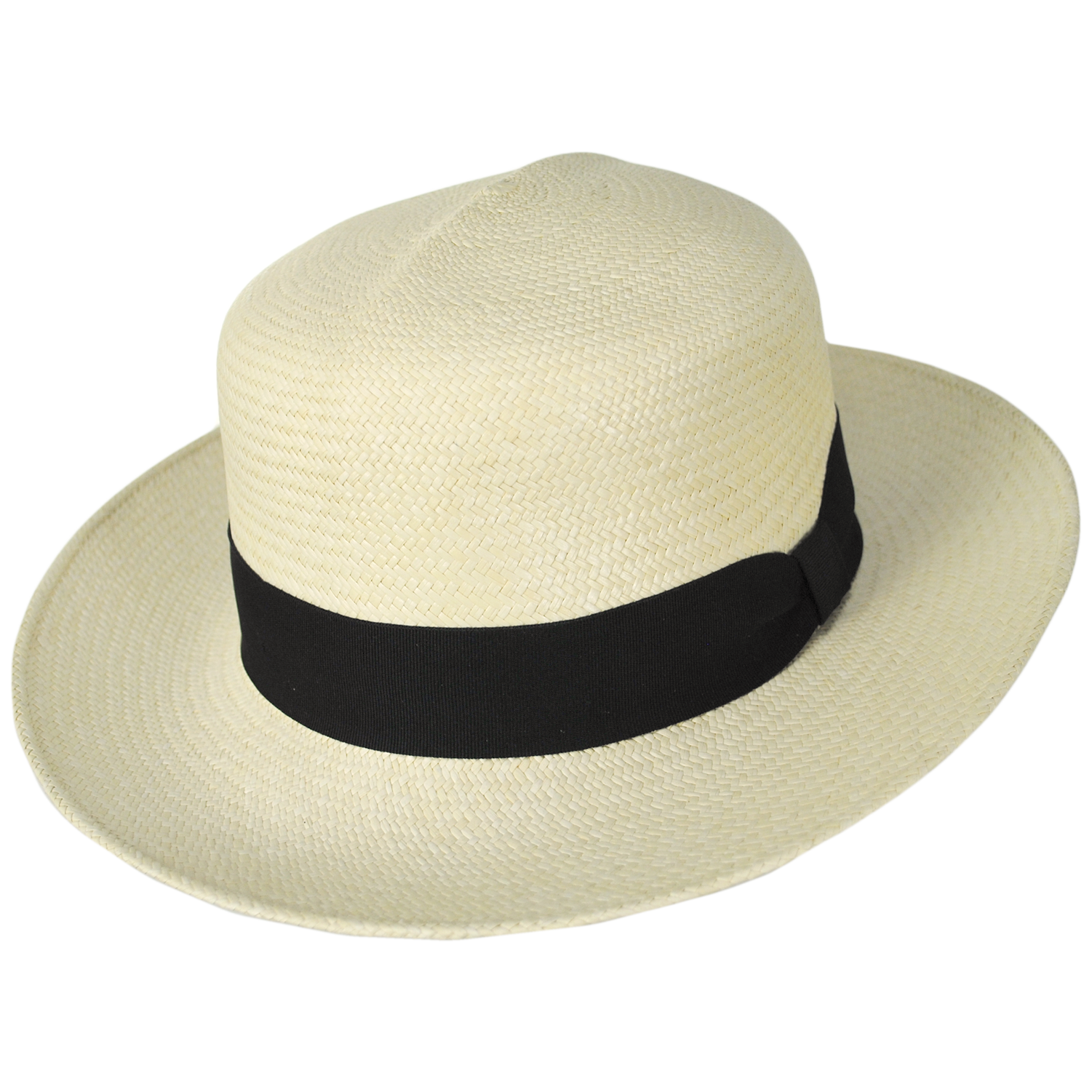
- OPTIMO - Straw (Panama or other) hat with full crown that has a ridge extending from front to back. Originally, the ridge would form naturally from folding hat in half. Now, usually blocked to form.
- OVERSEAS CAP - Olive drab cloth cap worn by soldiers in WW II and WW I. A 1979 fashion in wool that includes a cuff. A popular shape in 1981.
Featured Terms K-O
-

Montgomery Beret
Shop our Military Beret CollectionBritish military beret worn by Sir Bernard L. Montgomery in WW II. Famously dark blue felt with insignia.
-
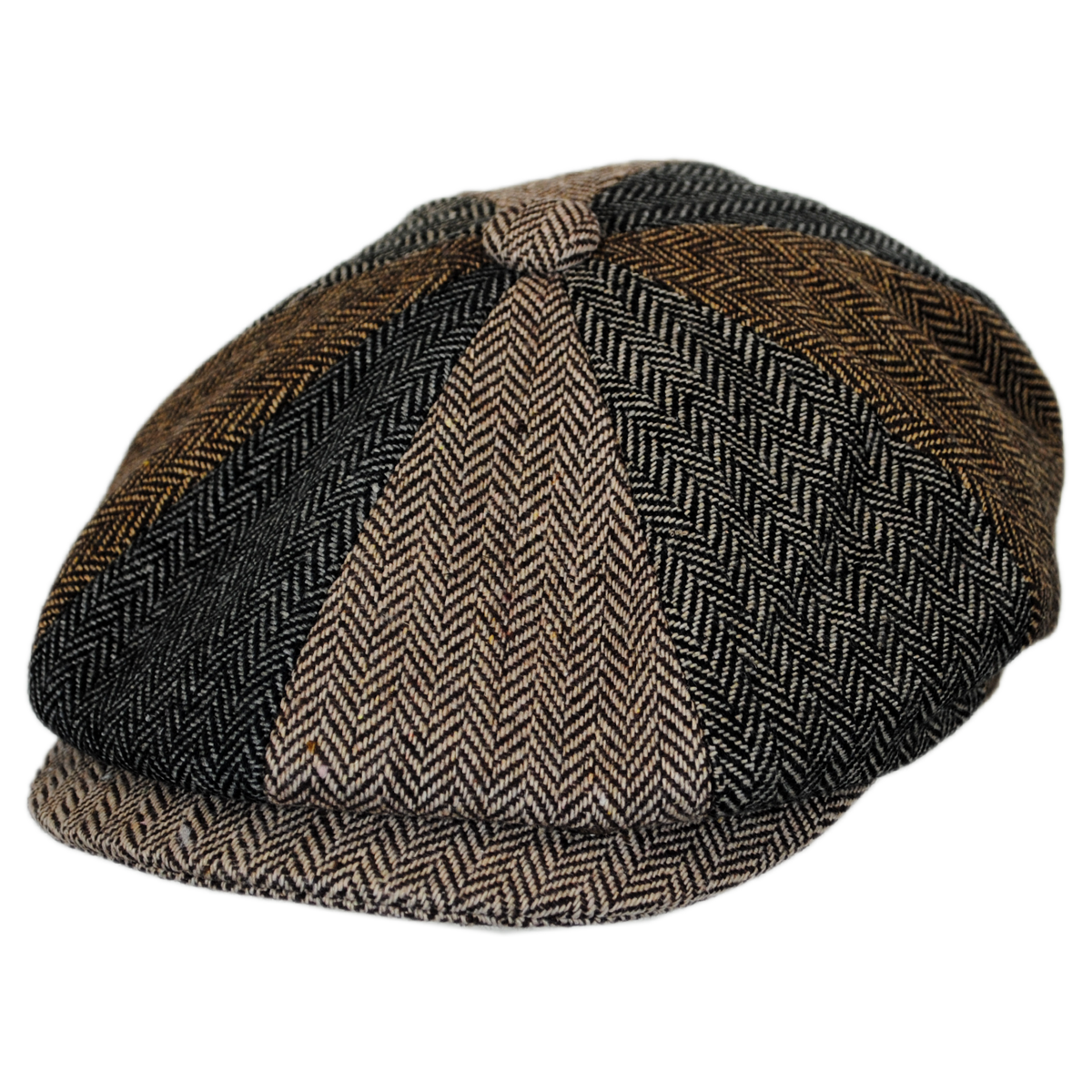
Newsboy
Jaxon Patchwork NewsboySoft fabric cap with 8-panel crown and visor snapped to crown. From 1920s-era newspaper child peddlers who wore the style. Also EIGHT-QUARTER CAP, NEWSY.
-
Optimo
Jaxon Habana Panama HatPanama straw hat with ridge down the center of its crown. Originally, the ridge would form naturally from folding hat in half. Now, usually blocked to form.



Collapsible content
P
- PADRE - Hat with a low crown and a broad, straight brim that has a slight curve a outer edge. Adapted from the hats that priests and missionaries wore. In 1978, Adri designed felt and straw. Popular style in the 1980's both felt and straw. Also PARSON'S HAT.
- PAGRI - The term for a turban within India, Bangladesh and Pakistan. It specifically refers to a headdress that is worn by men and needs to be manually tied. Also PUGGAREE or PUGGREE.
- PALLA - (Term from Roman occupation.) Medieval European head drapery that evolved from headrail.
- PANAMA - Hand woven straw hat from leaves of the Toquilla Palm plant that grows in Central and South America. Genuine Panama hats are hand-woven in Ecuador by artisans, but may be blocked and finished elsewhere. The hat style was famously pictured during construction of the Panama Canal (early 1900s), leading to the misnomer.
- PETASOS or PETASUS - (pet a sos, pet a sus) Earliest hats, of felt or straw, with brims that curved upward or downward. Introduced into pre-Hellenic Europe by Cretans, who had knowledge of felt making. Later, part of Greek traveling costume. Hat could be permitted to hang down the back when not in use by means of a thin chin strap or cords that tied under the chin. Many variations developed, an example would be the winged hat of Hermes (Greek) or Mercury (Roman). Other examples are found in the IV and III B.C. Tanagra statuettes.
- PHRYGIAN BONNET - (frij i an) Ancient Eastern cone-shaped cap with a point that falls forward if made of felt or woolen cloth, or remains erect if made of leather. Cap of freed slaves of Ancient Rome. Cap of liberty or "le Bonnet Rouge" during French Revolution in 18c. Illustration shows Scythian-Persian influence, later adapted by the Greeks. The female "Liberty" statue shows the style.
- PILEUS - (pi lee us) Roman (from Greek pilos) A close fitting cap of felt, leather, or wool, similar to a skullcap. Common to Ancient people. During the Renaissance, the cap evolved into BIRETTA.
- PILGRIM HAT - See PURITAN HAT.
- PILLBOX - Small brimless cap with telescope crown and straight sides. In Medieval times developed from a FILLET. Fashion made popular in 1960's by Jackie Kennedy. Also GARIBALDI PILLBOX. Also GARIBALDI PILLBOX.
- PITH HELMET - (19c.) Helmet-shaped hat of English army in India. Made from pith of the Indian spongewood tree, covered with white cotton and faced with green cloth. Originally worn in tropical regions as protection from the sun. Worn by polo players in the 20c. Hindu name TOPE or TOPI.
- PLANTERS HAT - Worn by sugar planters of Jamaica. Various weaves. Style of hat worn by golfer J. C. Snead in 1980's.
- POKE BONNET - By 1800, coiffures were "smaller heads," and bonnets were replacing the huge MOBS and CALASH styles. The poke shaped bonnet with rounded front brim had a small crown. The bonnet came in various shapes and fabrics.
- PORK PIE - (1930's) A new shape in men's hats with a low telescope crown and stingy brim. First shown in felt, then straw. Adapted for women. More recently popularized by "Heisenberg" of the television series, Breaking Bad.
- POSTILION HAT - (poce till yon) Also called the REMBRANDT or REUBENS from the great painters of the 17c. Revivals of the style in 18c. and 19c. The post riders of early 19c. traveling coaches wore a high hat with tapering crown.
- PROFILE HAT - Hat that is worn tilted to one side to show profile.
- PUGGAREE or PUGGREE - (pug ree) From pagri, East Indian word for a turban or scarf that is worn as protection against the sun. Now the pleated scarf worn as a band on a straw or felt hat. Also PAGRI.
- PURITAN HAT - High, flat-crowned felt hat with wide uncocked brim and a silver buckle on a ribbon band. CAVALIER and PURITAN hats (17c.) had the same basic form, but CAVALIER hats had ostrich plumes and were worn cocked.
Q
- QUAKE HAT - (17c.) Men's high quality, broad brimmed hat of felt or beaver, worn cocker or rolled. Colors were gray or brown.
- QUAKER BONNET - Quaker women wore very high quality, simplified versions of the prevailing fashion. Black hood replaced by the beaver hat of 18c., then the POKE BONNET in 19c., in which the crown was gathered not pleated.
R
- RANELAGH MOB - (18c.) A form of mob cap adapted from the style worn by market women.
- RETICULATED HEADDRESS - (14c.-15c.) Style consisting of braided coils of hair worn over each ear, covered with CAULS or nets of fine gold or silver wire strung with jewels or pearls. Later a CRESPINE or band was added. Many forms evolved, based on the position of the braids or buns.
- ROBIN HOOD HAT - (12c.) The English hero and outlaw, Robin Hood, was portrayed wearing the conical hood with self brim that was turned up at the back and worn down to a point in front. Hat was trimmed with a long quill.
- ROUGH RIDER HAT - Khaki felt soldier hat of Spanish American War of 1898-99. Crown was creased and brim was cocked on one side. Named after Colonel Theodore Roosevelt's troop of Rough Riders.
- ROUNDLET - (14c.-15c.) Stuffed roll of velvet, worn turban-fashion over a close fitting cap that covered all the hair.
- RUEBENS or REMBRANDT HAT - (17c.) Large felt hat decorated with feathers or flowers. Hat made fashionable from portraits of the period. Self portrait by Rubens with Isabella Brant is an example of Dutch costume, Isabella wears a mannish hat of straw over a lace cap.
S
- SAILOR - Flat-crowned, straight brimmed hat, usually made of straw. Grosgrain headband trimmed with flat bow at the side. Also BOATER, SENNIT.
- SHAKO - (shak o) Flat-topped, rigid, cylindrical military dress hat with a visor and tassels, plumes, or pompoms. Originally of fur, later of leather. Also TARBUCKET.
- SHEPHERDESS - (18c.) Shallow crowned hat with wide brim that dips in front and back. Made of fine straw (Leghorn). Also CHURCHILLS, GYPSY.
- SILK HAT - (18c., 19c.) Black hat of silk plush, with a high, cylindrical shaped crown and a stiff rolled edge brim. As the beaver supply decreased, the SILKER became popular. Also OPERA HAT, TOPPER, GIBUS.
- SKULL CAP - Close fitting cap, worn on the back of the head. BEANIE (American), CALOTTE (French), YARMULKES (Jewish Male).
- SLOUCH CAP - Soft felt hat with broad flexible brim in various shapes. Also CIVIL WAR OFFICER'S HAT, HUNGARIAN HAT, (made popular, 1853, Louis Kossuth) GARBO, FEDORA.
- SNAP BRIM - Brim turns down in front and up in the back. Made of felt, straw, or fabric.
- SNOOD - In Medieval times, the support that holds or covers the hair was called a CAUL. In 19c., the support was called a net, sometimes SNOOD, and consisted of a net-like bag at the back of the head that held the hair or wig. In 1930, Schiaparelli designed a small fur toque to which a chenille net was attached in back to hold the hair (SNOOD).
- SOMBRERO - (som breh ro) Spanish word meaning hat. The high crown keeps the head cool and the broad brim protects the wearer from the sun or rain. The common man's sombrero is made of straw, the gentleman's of felt. Also COWBOY HAT, TEN-GALLON HAT, AMERICAN STETSON (1870).
- SOUTHWESTER - (sou wes ter) Originally waterproof hat of oiled canvas. Then rubberized by the Mackintosh process. Now the hat is usually plastic coated. Originally worn by sailors as protection against stormy weather. The brim is broader at back to protect the neck. Also SOU'WESTER.
- SPANISH TOQUE - (Mid 16c.) The crown of the beret took on height when worn over a wired frame. The brim was narrow and the hat had a jeweled band and feathers.
- STATUTE CAP- A statute, passed in England in 1571, made wearing this woolen cap compulsory for all below a certain social rank. Also can be seen in some illustrations of King Edward VI.
- STOCKING CAP - Knit cap with long tapering end (liripipe), usually finished with a pompom or tassel.
- STOVEPIPE HAT - (Late 18c.) Hat of felt, napped with beaver, with tall rounded crown , and rolled small brim. Evolved into high silk hat.
- STUDENTERHUE - A hat given to Danish high school students when they graduate.
- SUGAR LOAF - (14c.-15c.) Tall hat with curved crown that resembles the loaf shape into which refined sugar was made.
- SUNBONNET - A bonnet for women and girls that has a large stiff brim and a flap at the back for protection from the sun.
T
- TAJ - Persian and Arabic for crown. A brimless, tall, cone shaped cap of distinction.
- TAM O' SHANTER - A variation of the Scottish bonnet named after a character in the poem by Robert Burns. Cap was made of heavy brushed wool with a center tassel.
- TANAGRA - Straw hat with a all conical crown from B.C.E. Greece. Example from terra cotta statuette of a woman from Boeotian town of Tanagra. Also PETASOS, THOLIA.
- TARBOOSH - Arabic for cap. Brimless felt or cloth skullcap, worn by both Muslim men and women. Usually red, sometimes has a scarf draped around it or covered with a veil. Larger than a FEZ.
- TASHASHIT - (Berber) See CHECHIA.
- THERESE - (Late 16c.) Large hood of gauze over a frame of wire or whale bone. Also CALASH.
- TIARA - (tee ar ah) Greek origin, crown. Woman's crown-like headdress of jewels. Also ancient Persian, Assyrian head covering of the king. A tall conical cap. Also TIRE, MITRE.
- TOONGABBIE - (1960) A washable toweling hat, made of cotton terry cloth.
- TOP HAT - Worn for formal occasions with tail coat. Tall cylindrical crown in various heights. Late 19c., changed from beaver to silk hat. Also TOPPER, SILKER.
- TOPEE or TOPI - (Hindu) Hat worn in India and other tropical countries as protection from the sun. See PITH HELMET.
- TOQUE - (toke) Small brimless hat or cap with full crown and decorated with puffs, lace. Can be decorated with feathers or veiling. Formerly a 16c. small hat, full crown, feather. Some versions have a small brim. Queen Mary of England (20c.) favored this style. At the inauguration of President Reagan in 1981, Nancy Reagan wore a red, braided toque that matched her coat.
- TOREADOR HAT - Bicorne shape, set crosswise on the head.
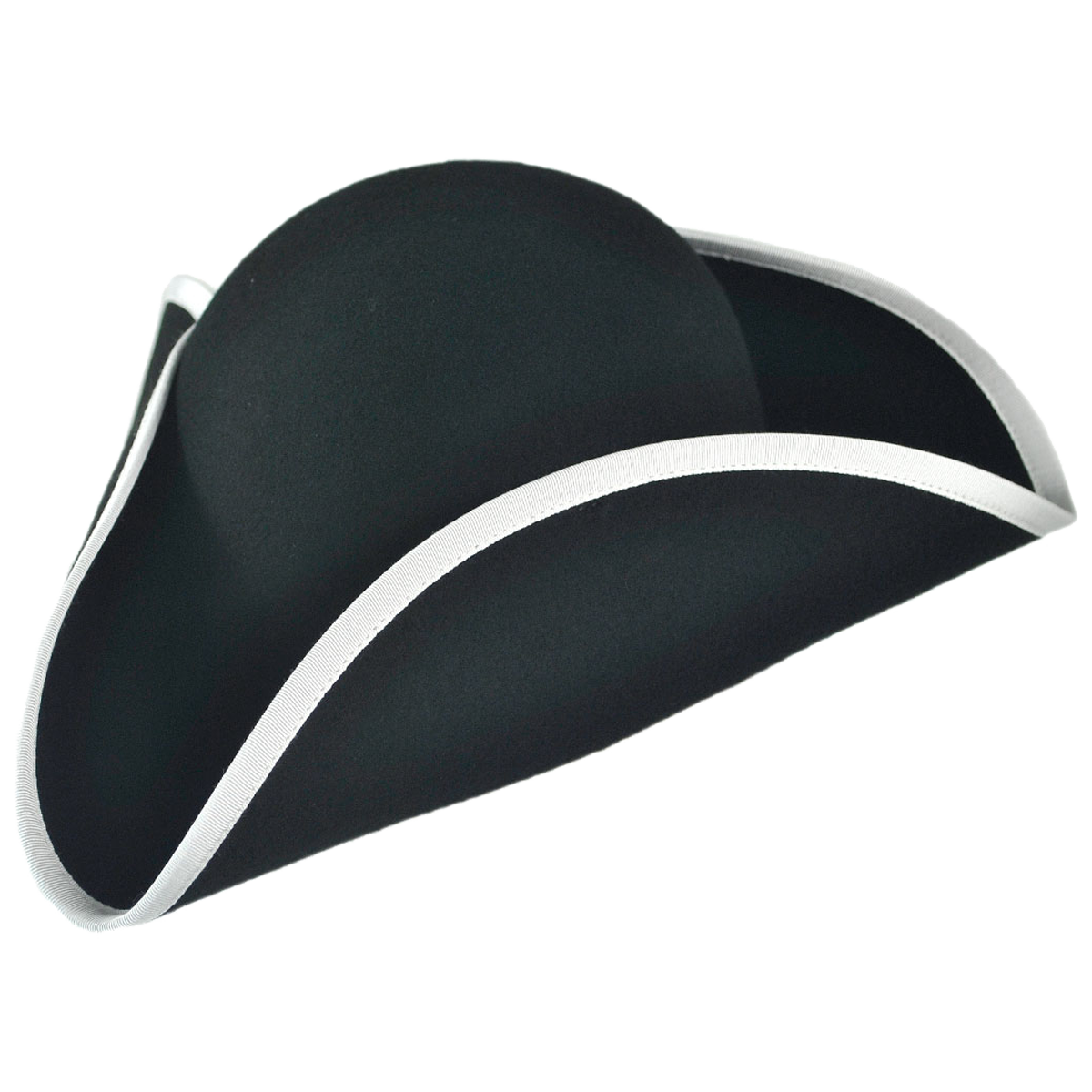
- TRICORNE - Three cornered hat with upturned wide brim. As the Cavalier hat grew larger and the brim began to droop, fashion led to "cocking" the brim up on one side. In the late 17c., the hat was cocked on three sides, hence TRICORNE. Also TRICORN.
- TRILBY - For all intents and purposes a TRILBY is synonymous with FEDORA. FEDORA is used more in the USA and TRILBY is preferred in the United Kingdom.
- TRUNCATED TIARA - Ancient Babylonian and Assyrian hat of wool or felt with short lappets.
- TUDOR BERET or RENAISSANCE BERET - From 1539 painting of Henry VIII portrait by Holbein. Hat of velvet with jewel and feather.
- TUQUE - (tuke) Winter knit hat, tapered and closed at both ends. Worn with one end tucked into the other. Seen at Canadian winter sporting events.
- TURBAN - Ancient Eastern headdress, consisting of long pieces of cloth rolled and formed over a cap. Periodically the fashion is revived in various forms, especially when European culture is exposed to the East. The Moors in Spain, the returning Crusaders in 11-13c., the capture of Constantinople in 1453, all brought Eastern influence in costume and hairstyles. The Napoleonic campaign in Egypt brought this influence to Europe (Empire fashion) in early 19c. The illustration is of an 1931 French turban executed by Mr. Alexander. Early 20c., fashion was influenced by Paul Poiret's fascination with costumes and fabrics of Eastern styles. Throughout the 20c., various styles of the turban have been presented.
- TUTULUS - Etruscan (700-300 B.C.E.) Braided hairstyle of women evolved into conical shaped cap, as worn by peasants and soldiers.
Featured Terms P-T
-

Pillbox
Shop our Pillbox CollectionSmall brimless cap with telescope crown and straight sides. In Medieval times developed from a FILLET. Fashion made popular in 1960's by Jackie Kennedy.
-

Pork Pie
Shop our Pork Pie CollectionA newer shape in men's hats with a low telescope crown and stingy brim. More recently popularized by "Heisenberg" of the television series, Breaking Bad.
-
Tricorne
Jaxon Wool Felt TricornThree-cornered hat with upturned brim adapted from the CAVALIER hat. In the late 17c., the hat was cocked on three sides, hence TRICORNE. Also TRICORN.



Collapsible content
U
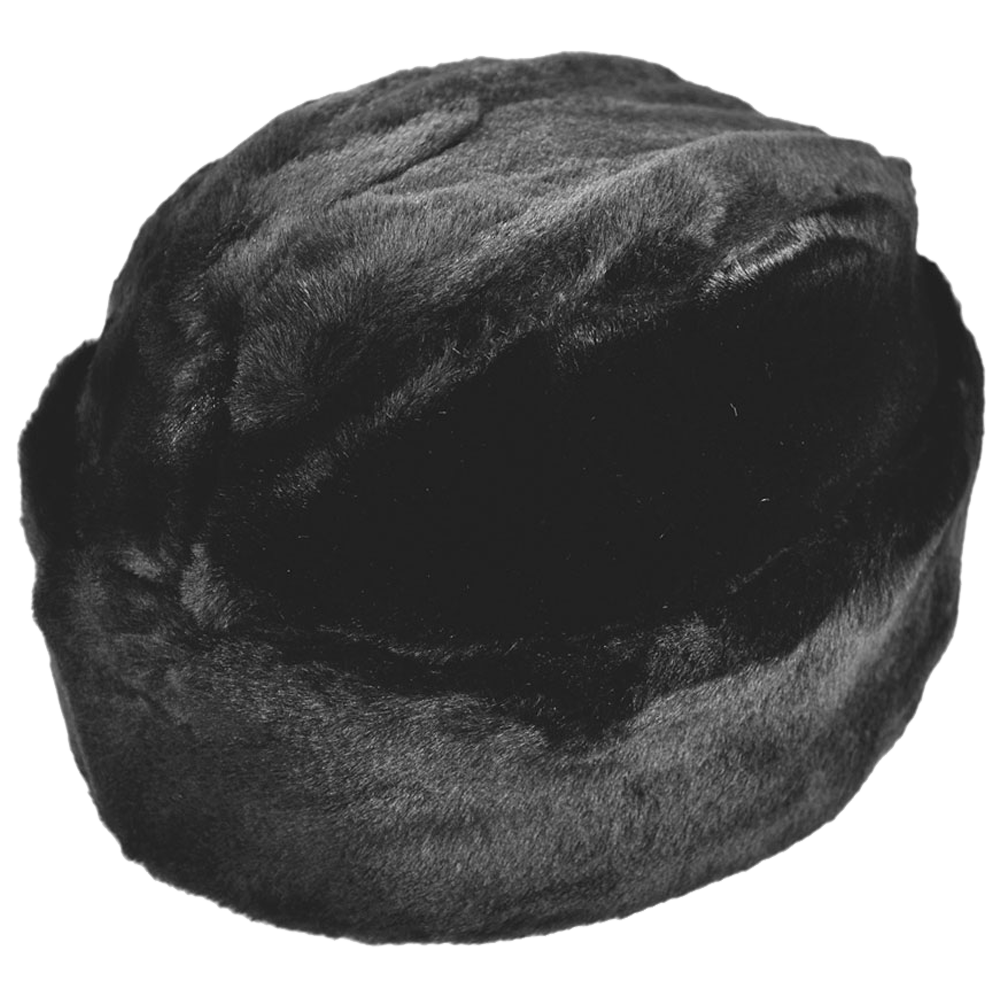
- USHANKA - A Russian fur cap with ear flaps. Also COSSACK. Similar to TROOPER, TRAPPER, and AVIATOR styles.
V
- VAGABOND HAT - Casual hat, has Dobbs trademark.
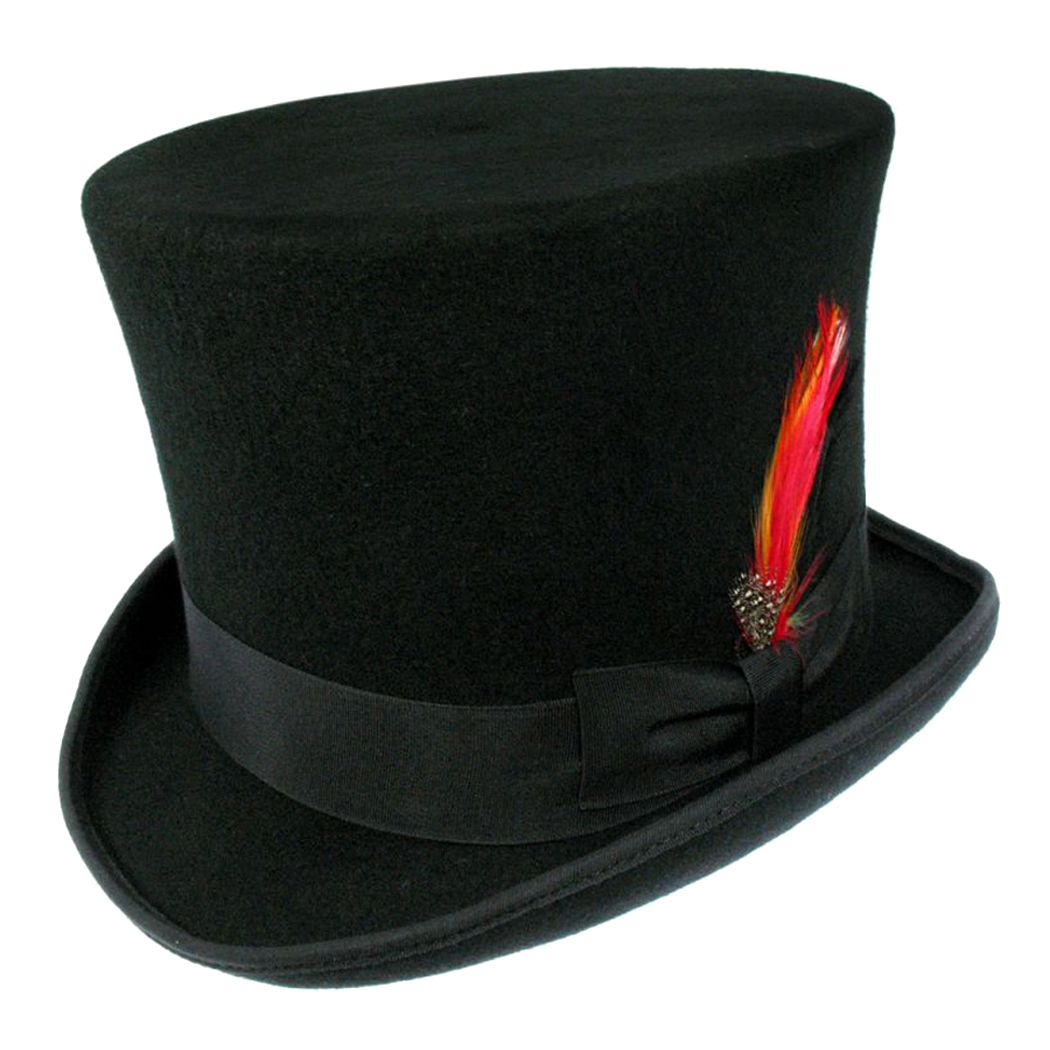
- VICTORIAN TOP HAT - Top hat style popular during the Victorian era (early 19c.- early 20c.) with a fluted crown and curled brim. Think Dickens and Christmas carolers.
- VOLENDAM - See DUTCH CAP.
- VULTURE HEADDRESS - Ancient Egyptian headdress. See EGYPTIAN CROWN.
W
- WATCH CAP - Knitted cap, navy blue, such as worn by sailors. Cap rolls down to keep forehead and neck warm. Formerly in worsted wool, now in synthetic fibers. Also BEANIE.
- WATTEAU - (18c.) Following the tall FONTANGE, the small cap appeared. The French painter and engraver, Watteau, showed the small hat in his illustrations, thereby setting a fashion. The hat was worn tipped forward to accommodate the high back hairstyles.
- WEDDING RING - (1979) Frank Olive's round-crown, rolled-brim hat, in shiny straw. Similar versions called KRIZIA HAT, BOWLER.
- WIMPLE - (Late 12c.-14.c ) The veil evolved into the wimple, a cloth draped across the throat, cheeks and chin, leaving the face exposed. Certain orders of nuns still wear the wimple. In 14c., the cloth wimple worn without a veil, pinned over coils of hair on either side of the head was known as a GORGET. In 1938, a toque of Persian lamb, with black georgette wimple.
- WITCH HAT - At the time of the persecution of witches in England, the costume of the times included the STEEPLE HENNIN. This remained a symbol of witch attire.
Y
- YARMULKE - Skullcap worn by Jewish males. Orthodox Jews wear the skullcap everyday. Cap consists of four or six pie-shaped pieces, and is lined or unlined. Also called a KIPPAH.
Z
- ZOUVE CAP - See CHECHIA.
- ZUCCHETTO - (tsook ket toe) Ecclesiastical calotte, skullcap.
Featured Terms U-Z
-
Ushanka
Jaxon Cossack Faux Fur HatA Russian fur cap with ear flaps. Also COSSACK. Similar to TROOPER, TRAPPER, and AVIATOR styles.
-
Victorian Top Hat
Jaxon Victorian Top HatVictorian era (early 19c. - early 20c.) top hat style with a fluted crown and curled brim. Think Dickens and Christmas carolers.
-

Watch Cap
Shop Watch Caps & BeaniesKnitted cap, traditionally navy blue, such as worn by sailors. Cap rolls down to keep forehead and neck warm. Also BEANIE.


